Research Use Only. All products are intended strictly for in vitro research and laboratory experimentation. Not for human consumption, therapeutic use, or clinical application.

Research & Science

Articles by Admin

50 Articles
Are Research Peptides Legal in the USA Featured
Peptide Research

Are Research Peptides Legal in the USA? Key Distinctions

Are research peptides legal in the USA? The answer depends on the particular material, its actual intended use, the activity involved, and the applicable law. Genuine laboratory research and distributing a product for human treatment raise different regulatory questions. An RUO label alone does not establish that a transaction is lawful or that a product… <a class="more-link" href="https://hotspan.com/are-research-peptides-legal-in-the-usa-2026-guide/">Continue reading <span class="screen-reader-text">Are Research Peptides Legal in the USA? Key Distinctions</span></a>

Latest Articles
BPC-157 for Gut and Tissue Healing 6 min
longetivity

BPC-157 Gut Research: Intestinal Barrier & Gastrointestinal Studies

Quick Answer: BPC-157 is a synthetic 15-amino-acid peptide studied for its role in repairing intestinal barrier tissue and other tissue types in laboratory research. It is sold strictly for Research Use Only and is not approved for human use. BPC-157 gut research is one of the most studied areas within the broader preclinical literature surrounding… <a class="more-link" href="https://hotspan.com/bpc-157-gut-healing-intestinal-barrier-restoration/">Continue reading <span class="screen-reader-text">BPC-157 Gut Research: Intestinal Barrier & Gastrointestinal Studies</span></a>

Why Third-Party Testing Matters for Research Peptides 5 min
Peptide Research

Why Third-Party Testing Matters for Research Peptides

For Laboratory & Research Use Only Not for Human or Veterinary Use Almost every peptide supplier’s product page shows a purity number. What most pages don’t show is who generated that number and that’s the detail that actually matters. If the same company that manufactures the peptide is also the one testing it, the result… <a class="more-link" href="https://hotspan.com/why-third-party-testing-matters-for-research-peptides/">Continue reading <span class="screen-reader-text">Why Third-Party Testing Matters for Research Peptides</span></a>

Peptides for Muscle Recovery 10 min
Peptide Research

Which Peptide Is Best for Fat Loss and Muscle Recovery? A Research-Based Decision Guide

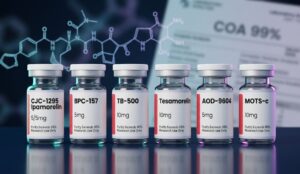
In published research there is no single “best” peptide for every study — but one category leads the literature for the combined objective of fat loss plus lean-tissue support: growth hormone secretagogues, with CJC-1295 + Ipamorelin the most-cited pairing. For fat-specific metabolic endpoints, Tesamorelin carries the strongest clinical data (visceral-fat reduction), and for recovery-focused work,… <a class="more-link" href="https://hotspan.com/which-peptide-is-best-for-fat-loss-and-muscle-recovery/">Continue reading <span class="screen-reader-text">Which Peptide Is Best for Fat Loss and Muscle Recovery? A Research-Based Decision Guide</span></a>

BPC-157 COA 8 min
Peptide Research

BPC-157 COA: How to Read Purity, HPLC & LC-MS Results

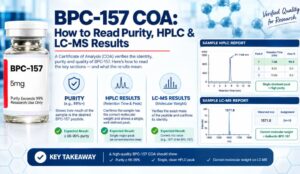
A BPC-157 COA, or Certificate of Analysis, is a laboratory document used to report analytical results associated with a particular batch of BPC-157. A useful COA can provide information about compound identity, purity, analytical methods, batch identification, testing dates, and other specifications. However, not every COA provides the same level of information. A document showing… <a class="more-link" href="https://hotspan.com/bpc-157-coa/">Continue reading <span class="screen-reader-text">BPC-157 COA: How to Read Purity, HPLC & LC-MS Results</span></a>

BPC-157 Stability 6 min
Peptide Research

BPC-157 Stability: Storage, Temperature & Degradation Research

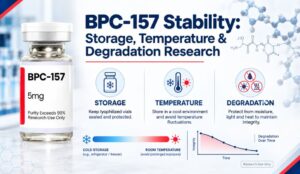
BPC-157 stability is an important consideration in peptide research because peptide integrity can be affected by environmental and formulation conditions. Temperature, moisture, pH, concentration, formulation, and handling can all influence the stability of peptide compounds. For BPC-157 specifically, publicly available information should be interpreted carefully because detailed, standardized long-term stability data across different formulations and… <a class="more-link" href="https://hotspan.com/bpc-157-stability/">Continue reading <span class="screen-reader-text">BPC-157 Stability: Storage, Temperature & Degradation Research</span></a>

BPC-157 Molecular Structure 6 min
Peptide Research

BPC-157 Molecular Structure, Formula, Weight & Amino Acid Sequence

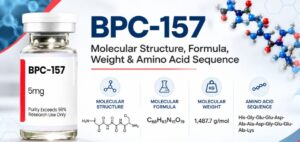
The BPC-157 molecular structure is that of a synthetic pentadecapeptide containing 15 amino acids. Its amino acid sequence is GEPPPGKPADDAGLV, and its molecular formula is C62H98N16O22. According to PubChem, BPC-157 has a molecular weight of approximately 1419.5 g/mol and is associated with CAS number 137525-51-0. [PubChem] Understanding the molecular structure is important when evaluating BPC-157… <a class="more-link" href="https://hotspan.com/bpc-157-molecular-structure/">Continue reading <span class="screen-reader-text">BPC-157 Molecular Structure, Formula, Weight & Amino Acid Sequence</span></a>

How to Read a Peptide COA 9 min
Peptide Research

How to Read a Peptide COA: Purity, Identity and Content

Knowing how to read a peptide COA means asking more than whether the document displays a high purity percentage. A useful review connects the compound, batch, analytical method, reported result, and intended laboratory application. The goal is practical: identify what the evidence supports, what remains unknown, and which questions need clarification before the material is… <a class="more-link" href="https://hotspan.com/how-to-read-a-peptide-coa/">Continue reading <span class="screen-reader-text">How to Read a Peptide COA: Purity, Identity and Content</span></a>

BPC-157 Mechanism of Action 6 min
Peptide Research

BPC-157 Mechanism of Action: Research & Pathways

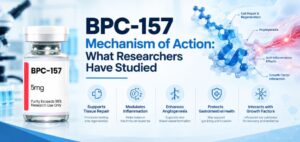
The BPC-157 mechanism of action is an active area of experimental research. Studies have investigated the peptide’s relationship with angiogenesis, nitric oxide signaling, vascular function, inflammatory pathways, and cellular processes associated with tissue repair. However, there is no single, fully established mechanism that explains all reported experimental observations. Instead, current research suggests that BPC-157 may… <a class="more-link" href="https://hotspan.com/bpc-157-mechanism-of-action/">Continue reading <span class="screen-reader-text">BPC-157 Mechanism of Action: Research & Pathways</span></a>

Synthetic Peptides 7 min
Peptide Research

Comparative Profiles of Synthetic Peptides in Endocrine, Lipid, and Cellular Repair Signaling Models

Overview: Synthetic reference peptides attract scientific interest because specific sequences interact with hormonetranscription, metabolic rate, and extracellular tissue-repair pathways. However, experimental compounds are designated strictlyfor laboratory research and are not approved to induce hypertrophy or general weight reduction in living models. Thebiochemical mechanisms differ sharply among CJC-1295, Ipamorelin, AOD-9604, Tesamorelin, BPC-157, and TB-500. This reference… <a class="more-link" href="https://hotspan.com/comparative-profiles-of-synthetic-peptides-in-endocrine-lipid-and-cellular-repair-signaling-models/">Continue reading <span class="screen-reader-text">Comparative Profiles of Synthetic Peptides in Endocrine, Lipid, and Cellular Repair Signaling Models</span></a>