
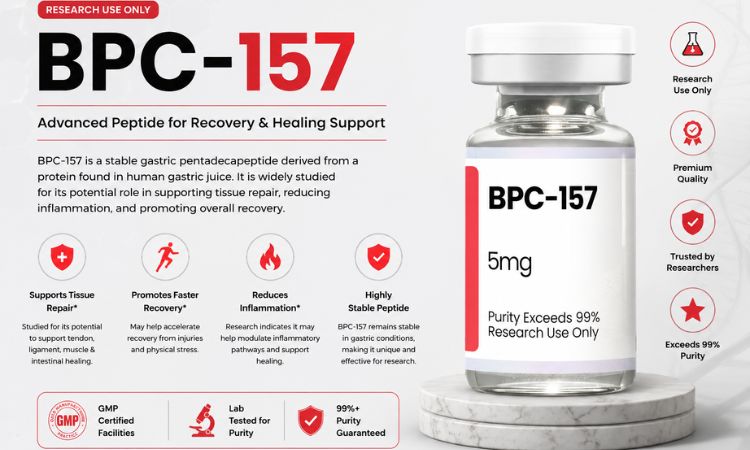
Quick Answer: Peptide vials are sterile, sealed glass containers holding lyophilized (freeze-dried) peptide powder for laboratory research. Standard sizes are 2mL–3mL, with common fill amounts of 1mg–10mg per vial. Vials protect peptide stability during storage and shipping until researchers reconstitute the compound for experimental use.
Key Facts
| Attribute | Detail |
|---|---|
| Form | Lyophilized (freeze-dried) powder |
| Common vial volume | 2mL–3mL |
| Common fill weights | 1mg, 5mg, 10mg, 30mg |
| Material | Borosilicate glass, sterile-sealed |
| Purity standard | ≥99%, third-party lab tested |
| Intended use | Laboratory research only (RUO) |
What Is a Peptide Vial?
A peptide vial is a small, sterile glass container used to store synthetic peptides in powder form for research applications. Peptides are supplied lyophilized a process that removes moisture through freeze-drying because this format preserves molecular stability far longer than a liquid solution. Each vial is sealed under controlled conditions to prevent contamination and degradation before the researcher opens it.
Inside the vial, the peptide typically appears as a white or off-white cake or fine powder. Both are normal presentations. What matters for research validity is batch purity, proper sealing, and verified identity through a Certificate of Analysis (COA).
Common Peptide Vial Sizes
Peptide vials are manufactured in standardized volumes to match typical laboratory needs.
- 2mL vials – smaller research quantities, common for lower-dose compounds
- 3mL vials – the most widely used size across research peptide suppliers
- Vial volume is separate from peptide weight; a 3mL vial can hold 1mg or 10mg of lyophilized powder depending on the product
Fill weights researchers most often encounter include 1mg, 5mg, 10mg, and 30mg, with higher-weight presentations available for select compounds.
How Are Peptide Vials Used in Research?
In a laboratory setting, a sealed vial is reconstituted into solution immediately before use, then handled according to standard research protocols for temperature control and sterility. Proper technique during reconstitution and storage directly affects peptide stability and the reliability of experimental results. Unopened, properly stored vials maintain long-term stability; once reconstituted, standard cold-chain storage practices apply.
What to Look for When Buying Peptide Vials
Not all suppliers hold peptides to the same standard. Researchers should confirm the following before purchasing:
- Verified purity — look for ≥98–99% purity backed by HPLC or mass spectrometry data
- Third-party COA — every batch should have an independent Certificate of Analysis available
- cGMP-compliant manufacturing — indicates consistent, controlled production standards
- US-based testing and sourcing — reduces variability and supply chain risk
- Clear RUO labeling — confirms the product is designated strictly for laboratory research
Peptide Vials Available at Hotspan
Hotspan supplies lyophilized research peptide vials across multiple categories, each backed by third-party testing and COA documentation.
| Peptide | Quantity | COA Reference |
|---|---|---|
| BPC-157 | 5mg / 10mg | Available per batch |
| TB-500 | 10mg | Available per batch |
| BPC-157 / TB-500 Blend | 10mg | Available per batch |
| NAD+ | 500mg / 1000mg | Available per batch |
| Ipamorelin | 10mg | Available per batch |
| CJC-1295 / Ipamorelin Blend | 10mg | Available per batch |
| AOD-9604 | 5mg | Available per batch |
| GHK-Cu | 50mg / 100mg | Available per batch |
| Cagrilintide | 10mg | Available per batch |
| GLP2-T (Tirzepatide) | 10mg / 30mg | Available per batch |
Browse the full catalog in the Research Peptides Collection, verify batch data in the COA Library, and explore more compound breakdowns in the Research Blog.
Vial Materials & Sealing
Research peptide vials use borosilicate glass. Chosen for chemical resistance.
Prevents leaching into powder. Keeps peptide integrity intact.
Sealing methods vary by supplier:
- Crimp-top seals — aluminum cap, rubber stopper. Common for shipping.
- Screw-cap seals — PTFE-lined. Reusable, easy access.
- Rubber septum — allows syringe draw without full removal.
Seal quality affects contamination risk. Punctured stoppers degrade faster.
Why Lyophilization Matters
Freeze-drying removes nearly all moisture. Moisture drives peptide degradation.
Benefits of lyophilized form:
- Extended shelf stability, often years when sealed
- Reduced microbial growth risk
- Easier shipping without cold-chain requirements
- Preserved molecular structure until reconstitution
Liquid peptide solutions degrade faster. Lyophilized powder is the research standard for this reason.
Factors That Affect Vial Stability
Several variables impact how long a peptide vial stays viable:
- Temperature exposure — heat accelerates breakdown
- Light exposure — UV degrades some peptide chains
- Humidity — moisture reintroduction shortens shelf life
- Vial integrity — cracked seals compromise sterility
- Freeze-thaw cycles — repeated cycling after reconstitution reduces potency
Researchers should log storage conditions per batch for reproducibility.
Sealed vs. Reconstituted Storage
Unopened vials and reconstituted solutions behave differently.
| State | Typical Stability | Storage Condition |
|---|---|---|
| Sealed, lyophilized | Long-term (months to years) | Cool, dry, dark |
| Reconstituted solution | Short-term (days to weeks) | Refrigerated, protected from light |
This distinction matters for experimental planning. Reconstitute only what’s needed per session.
FAQs
What are peptide vials used for?
Peptide vials store lyophilized peptides for laboratory research. They are not intended for human use.
What size are standard peptide vials?
Most research peptide vials are 2mL or 3mL, sized to fit standard lab equipment and racks.
How much peptide is in one vial?
Common fill weights are 1mg, 5mg, 10mg, and 30mg, depending on the compound and supplier.
How should peptide vials be stored?
Unopened vials should be kept cool, dry, and away from light. Reconstituted solutions require refrigeration per standard lab protocol.
What does lyophilized mean?
Lyophilized means freeze-dried. The process removes moisture to extend the peptide’s shelf life and stability.
Are peptide vials third-party tested?
Reputable suppliers test every batch independently and provide a COA confirming purity and identity.
What’s the shelf life of a sealed peptide vial?
Properly stored, unopened lyophilized vials remain stable for extended periods, well beyond reconstituted solutions.
Are these vials safe for human use?
No. All peptide vials sold for research are intended strictly for laboratory use and are not evaluated for human consumption or clinical application.