Research Use Only. All products are intended strictly for in vitro research and laboratory experimentation. Not for human consumption, therapeutic use, or clinical application.

Research & Science

Peptide Research

59 Articles
BPC-157 Mechanism of Action Featured
Peptide Research

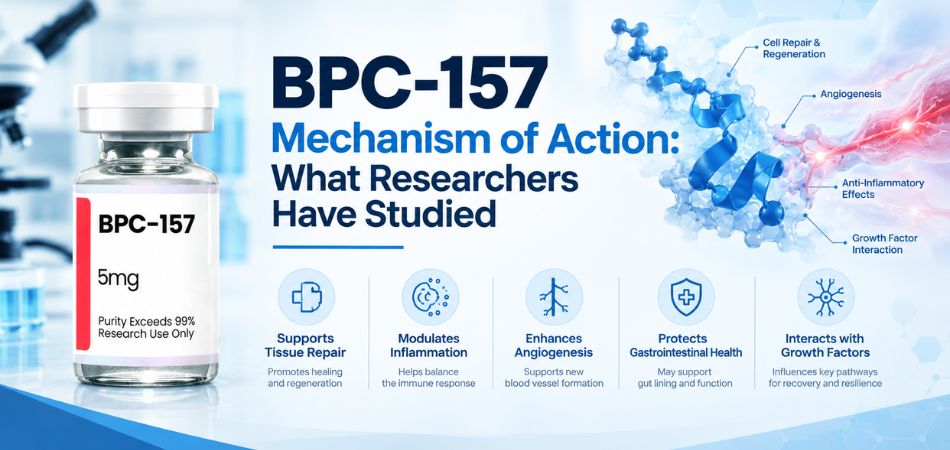
BPC-157 Mechanism of Action: Research & Pathways

The BPC-157 mechanism of action is an active area of experimental research. Studies have investigated the peptide’s relationship with angiogenesis, nitric oxide signaling, vascular function, inflammatory pathways, and cellular processes associated with tissue repair. However, there is no single, fully established mechanism that explains all reported experimental observations. Instead, current research suggests that BPC-157 may… <a class="more-link" href="https://hotspan.com/bpc-157-mechanism-of-action/">Continue reading <span class="screen-reader-text">BPC-157 Mechanism of Action: Research & Pathways</span></a>

Latest Articles
Synthetic Peptides 7 min
Peptide Research

Comparative Profiles of Synthetic Peptides in Endocrine, Lipid, and Cellular Repair Signaling Models

Overview: Synthetic reference peptides attract scientific interest because specific sequences interact with hormonetranscription, metabolic rate, and extracellular tissue-repair pathways. However, experimental compounds are designated strictlyfor laboratory research and are not approved to induce hypertrophy or general weight reduction in living models. Thebiochemical mechanisms differ sharply among CJC-1295, Ipamorelin, AOD-9604, Tesamorelin, BPC-157, and TB-500. This reference… <a class="more-link" href="https://hotspan.com/comparative-profiles-of-synthetic-peptides-in-endocrine-lipid-and-cellular-repair-signaling-models/">Continue reading <span class="screen-reader-text">Comparative Profiles of Synthetic Peptides in Endocrine, Lipid, and Cellular Repair Signaling Models</span></a>

BPC-157 Studies 7 min
Peptide Research

BPC-157 Studies: What Does Scientific Research Show?

BPC-157 studies have investigated the peptide across a range of experimental models, including gastrointestinal, vascular, musculoskeletal, inflammatory, and tissue-repair research. Much of the published evidence comes from animal and laboratory studies rather than large controlled human trials. For a broader overview of BPC-157 research, see our [BPC-157 Research: Studies, Mechanism, Structure & Properties] guide. BPC-157… <a class="more-link" href="https://hotspan.com/bpc-157-studies/">Continue reading <span class="screen-reader-text">BPC-157 Studies: What Does Scientific Research Show?</span></a>

Research Use Only Peptides 10 min
Peptide Research

What Does Research Use Only Mean for Peptides?

Research use only means a peptide is made and sold for laboratory work—not for use in people or animals. You may also see the shortened term “RUO” on a label or product page. In simple terms, a research peptide belongs in a qualified laboratory. It should not be injected, swallowed, inhaled or applied to the skin.… <a class="more-link" href="https://hotspan.com/research-use-only-peptides/">Continue reading <span class="screen-reader-text">What Does Research Use Only Mean for Peptides?</span></a>

BPC-157 Research: Studies, Mechanism, Structure & Properties 10 min
Peptide Research

BPC-157 Research: Studies, Mechanism, Structure & Properties

BPC-157 is a synthetic 15-amino-acid peptide that has been investigated primarily in preclinical research. Scientific studies have examined its biological activity across gastrointestinal, vascular, musculoskeletal, nervous-system, and other experimental models. This guide provides a research-focused overview of BPC-157, including its molecular structure, properties, mechanisms investigated in laboratory studies, major research areas, stability, analytical testing, and… <a class="more-link" href="https://hotspan.com/bpc-157-research/">Continue reading <span class="screen-reader-text">BPC-157 Research: Studies, Mechanism, Structure & Properties</span></a>

Peptide Vials 4 min
Peptide Research

What Are Peptide Vials? Research Guide & Buying Info

Quick Answer: Peptide vials are sterile, sealed glass containers holding lyophilized (freeze-dried) peptide powder for laboratory research. Standard sizes are 2mL–3mL, with common fill amounts of 1mg–10mg per vial. Vials protect peptide stability during storage and shipping until researchers reconstitute the compound for experimental use. Key Facts Attribute Detail Form Lyophilized (freeze-dried) powder Common vial… <a class="more-link" href="https://hotspan.com/what-are-peptide-vials-research-guide-buying-info/">Continue reading <span class="screen-reader-text">What Are Peptide Vials? Research Guide & Buying Info</span></a>

Are you 21 or older?

You must be 21 years of age or older to enter this website.